
Blood test offers hope for more effective ovarian cancer treatment
Media Release – 12 November 2025
New clinical research has identified a blood test that can reveal which women are more likely to respond to a particular treatment for ovarian cancer, known as PARP inhibitor therapy.
More than 300,000 women are diagnosed with ovarian cancer globally each year, including 1,700 in Australia.
The four-year SOLACE2 clinical trial involved 15 hospitals across Australia and was co-led by the University of Sydney NHMRC Clinical Trials Centre (CTC), RMIT University and WEHI. It is a collaborative group study of the Australia New Zealand Gynaecological Oncology Group (ANZGOG), providing funding and support for the translational program. The study also received funding support from AstraZeneca.
The Phase II trial tested different strategies for priming the immune system to enhance the effectiveness of PARP inhibitor therapy, which stops cancer cells from repairing their own damaged DNA by blocking the PARP enzyme.
During this trial a new companion blood test for women with ovarian cancer was also evaluated – with promising results.
Precision targeting cancer treatment for better outcomes
PARP inhibitor therapy is currently offered to women whose cancer has a defect in DNA repair, known as homologous recombination deficiency. These cancers are called ‘HRD positive’.
However, clinicians have long recognised that some women with an ‘HRD negative’ cancer can still benefit from PARP inhibitors, while others with an ‘HRD positive’ ovarian cancer may not respond, suggesting that other factors may influence treatment response.
RMIT lead researcher and co-senior author, Distinguished Professor Magdalena Plebanski, said there had been no easy way to more effectively target PARP inhibitor therapy, beyond the currently approved HRD test, until now.
“In SOLACE2, we demonstrated that a new immune test could better indicate which women will respond to PARP inhibitors,” said Plebanski, who heads RMIT’s Accelerator for Translational Research and Clinical Trials (ATRACT) Centre.
“We expect this promising new test will enable more effective screening and identification of eligible patients for PARP inhibitors, allowing us to provide this leading treatment to the women most likely to benefit.”
The new blood test measures the increase in expression of immune biomarkers that reflect the movement of good, cancer-destroying immune cells towards the cancer cells hiding in the body, together with a measure of important inflammatory processes that aid cancer growth and treatment resistance, providing a simple ‘biomarker signature’ in blood.
The team’s results, published in Nature Communications, reveal that the RMIT-patented biomarkers – easily identified through a simple blood test – may be a better guide to who’ll potentially benefit from PARP inhibitor therapy than the current gold standard HRD test, meaning it requires urgent validation.
The current HRD test requires sufficient cancer tissue and the ability to perform complex analysis of DNA repair, which is not always available or feasible. In addition, the test may not provide an accurate reflection of the current DNA repair capability of the cancer, as this can change over time.
“Our test focused on a real-time blood immune response rather than on the DNA repair capability of the cancer, which may no longer be accurate. In doing so, we more accurately identified which SOLACE2 patients would most benefit from PARP inhibitor therapy,” Plebanski said.
WEHI lead and joint-senior author Professor Clare Scott AM, said an important finding was how immune cells in the cancer affected the response to PARP inhibitor therapy, particularly in combination therapy.
Scott, who leads WEHI’s Ovarian and Rare Cancer Laboratory and is the Chair of ANZGOG, said a clear indication of who would respond to treatment came from predicting whether effector T cells could increase their migration into the tumour, where they can start killing the cancer cells.
“Now that we understand this is a vital factor for cancer control, we could also potentially improve treatments by focusing on promoting this beneficial migration of immune cells in the future,” said Scott, who is also a medical oncologist at the Peter MacCallum Cancer Centre, Royal Women’s Hospital and the Royal Melbourne Hospital.
The new test is not currently available for patients, as it still needs to undergo further testing and confirmation before obtaining necessary approvals for routine use.
What the overall trial found
Professor Chee Khoon Lee, clinical lead at the University of Sydney’s NHMRC Clinical Trials Centre (CTC) and co-study chair, said the SOLACE2 clinical trial showed that three months of immune priming helped delay ovarian cancer recurrence when followed by treatment with the PARP inhibitor and immunotherapy.
“Despite the treatment benefit we saw with this approach, the small trial did not provide the definitive clinical validation we were seeking, so more work will be needed to validate that,” Lee said.
“However, our study did successfully reveal this new test that has the potential to transform outcomes for many women diagnosed with ovarian cancer, helping clinicians to better personalise treatments, ensuring each woman receives the most effective therapy for her.”
Ongoing collaboration key to progressing cancer treatments
The SOLACE2 trial represents the power of collaboration between Australia’s leading cancer research institutions and the vital role of ANZGOG in uniting clinicians, scientists, and clinical trial groups to improve outcomes for women affected by gynaecological cancers.
Most of the study’s investigators are ANZGOG members, a testament to the strength and depth of the ANZGOG clinical and research network across Australia and New Zealand. The organisation’s leadership in supporting investigator-initiated trials continues to accelerate discoveries that can change how gynaecological cancers are understood and treated.
Professor Clare Scott AM, Chair of ANZGOG, said collaboration between clinical researchers, laboratory scientists and industry was key to delivering transformative research for women with gynaecological cancer, including ovarian cancer.
“The success of the SOLACE2 trial demonstrates what’s possible when leading cancer centres, universities, and hospitals come together with a shared purpose,” said Professor Scott.
“Most of the investigators involved in this work are ANZGOG members, and this collaboration highlights the unique ecosystem we’ve built, where clinical insights directly inform research discoveries, and vice versa. It’s through this connected, cooperative approach that we can truly ensure important translational insights from clinical trials, which improve outcomes for women.”
Professor Scott said ANZGOG’s ongoing commitment to advancing clinical and translational research is central to ensuring that discoveries like the SOLACE2 findings move rapidly from the lab to the clinic.
“Our focus remains on enabling world-class, investigator-led research that delivers better, more personalised care and research that saves lives,” she said.
– ENDS –
‘Olaparib, durvalumab, and cyclophosphamide, and a prognostic blood signature in platinum-sensitive ovarian cancer: the randomized phase 2 SOLACE2 trial’ is published in Nature Communications (https://doi.org/10.1038/s41467-025-64130-6).
This study was approved by Sydney Local Health District (SLHD) Ethics Research Committee (RPAH Zone), HREC Reference No. 2019/ETH07640.
Media inquiries
For more information or to coordinate an interview, please contact: Monique Cerreto, Head of Communications & Engagement, ANZGOG:
Monique Cerreto: T: 0416 282 464, E: Monique.cerreto@anzgog.org.au
–
About Australia New Zealand Gynaecological Oncology Group (ANZGOG):
ANZGOG is the peak national gynaecological cancer research organisation for Australia and New Zealand. With over 1,500 members representing clinical, allied health and pure research specialities, and including community, our purpose is to improve outcomes and quality of life for everyone with a lived experience of gynaecological cancer by conducting and promoting clinical trials and multidisciplinary research.
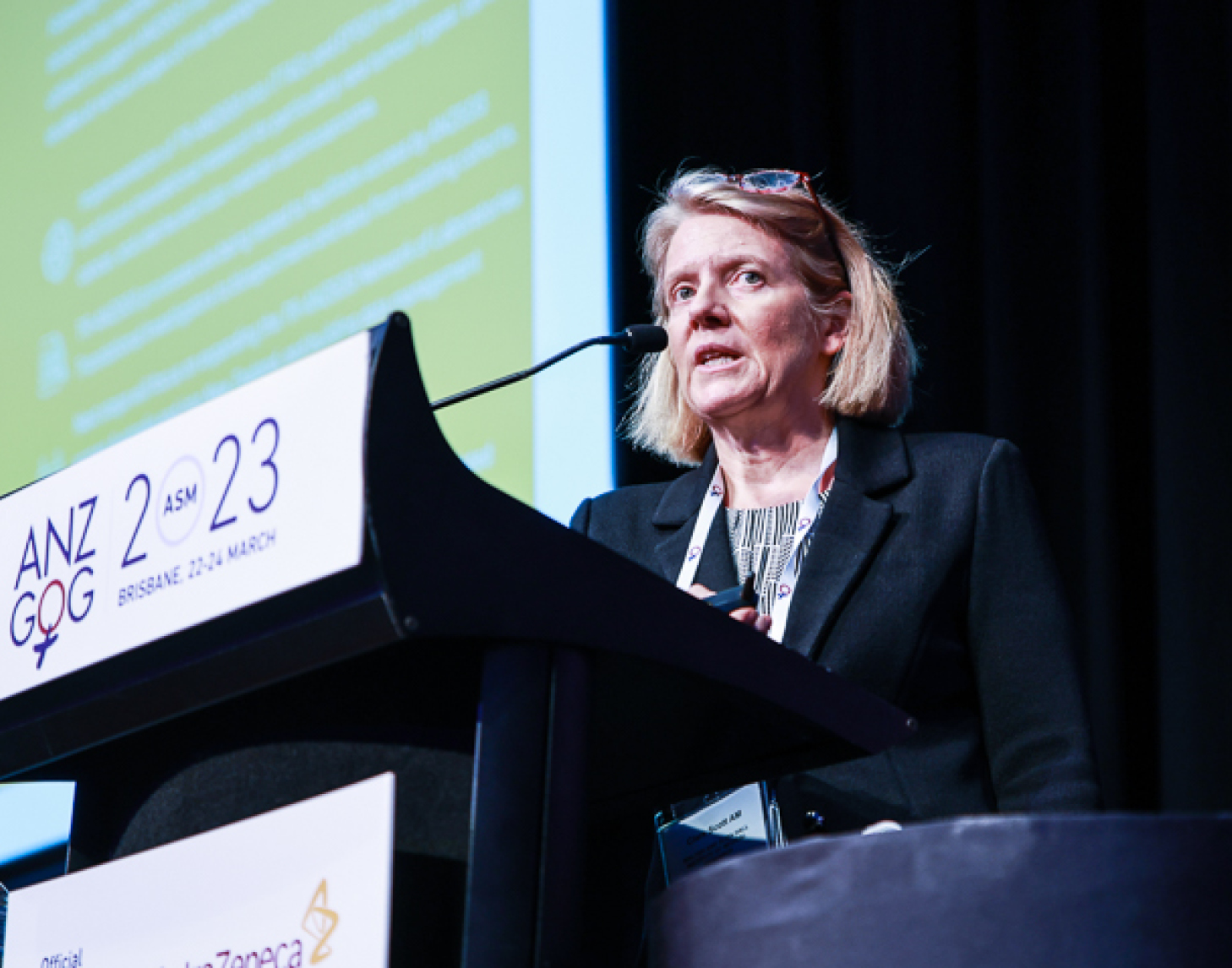
WEHI lead and joint-senior author Professor Clare Scott AM, said an important finding was how immune cells in the cancer affected the response to PARP inhibitor therapy, particularly in combination therapy.